
TRE™ Ankara (Tension and Trauma Releasing Exercises)

TRE® (Tension & Trauma Releasing Exercises): The Body’s Inherent Wisdom to Self-Heal

The human mind tends to analyze, rationalize, and try to forget challenging events, stress, or trauma. However, even when the mind believes it has moved on, the body never forgets what happened. When the massive survival energy (the fight, flight, or freeze response) generated by our autonomic nervous system during moments of danger, fear, or intense stress cannot be discharged from the system, it becomes trapped in our muscle tissues, fascial network, and the depths of our nervous system.

TRE® (Tension & Trauma Releasing Exercises) is an innovative, somatic (body-based) series of exercises developed by international trauma expert Dr. David Berceli. It is designed to assist the body in releasing this chronic stress, tension, and trauma trapped in deep muscle tissues.

TRE® is not a psychological or cognitive therapy; it speaks directly to the evolutionary codes of human physiology. Its primary goal is to safely reawaken the “neurogenic tremor” mechanism—a natural reflex inherent in the body but suppressed by the social conditioning of modern life.

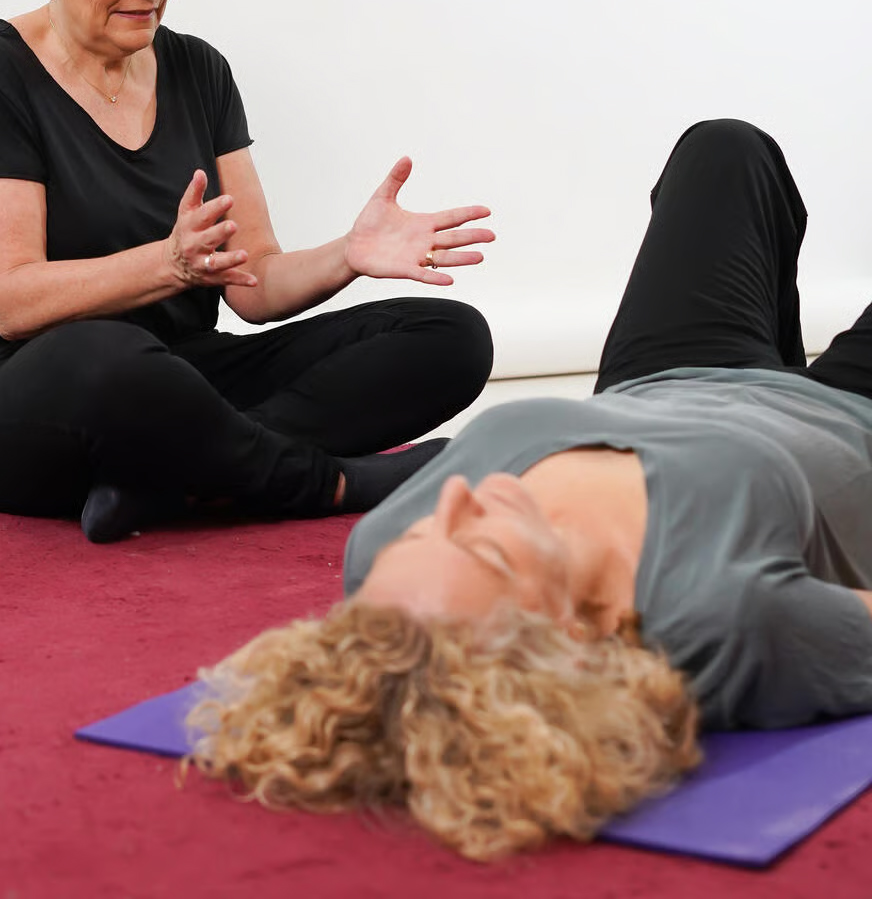
TRE™ (TensIon and Trauma ReleasIng Exercises)

Neurogenic Tremors: A Suppressed Evolutionary Reflex

When we observe wild animals in nature immediately after surviving a lethal threat (for instance, an antelope escaping a lion’s attack), we see them collapse and shake violently once they reach a safe area. This shaking is not a sign of weakness or shivering from fear; on the contrary, it is the nervous system’s method of discharging the excess adrenaline and kinetic energy generated for escape, having received the “danger has passed” signal. After a few minutes of this neurogenic tremoring, the animal returns to its herd and continues grazing, displaying no signs of trauma (PTSD).

We humans possess the exact same mammalian nervous system and the identical “discharge through shaking” reflex. However, our evolved higher brain (neocortex) and social conditioning (“I must stand strong,” “I shouldn’t cry,” “shaking in public is a weakness”) inhibit this natural discharge mechanism. The intense energy that cannot be expelled turns inward, transforming into chronic muscle spasms, postural dysfunctions, insomnia, anxiety, and psychosomatic pain.

TRE® interventions step in precisely at this point, gently bypassing the brain’s control mechanisms to release the body’s primitive, wise tremoring reflex in a controlled environment.

The Center of Trauma and the Muscle of the Soul: The Psoas

At the core of the TRE® methodology lies one of the most critical muscles in human anatomy: the Psoas (iliopsoas) muscle. The psoas is the only muscle that directly connects our spine (lumbar vertebrae) to our pelvis and legs. It is also the first command center of our nervous system in moments of perceived danger.

When we detect a threat (whether a physical accident or intense workplace stress), our brain forces us to contract into a fetal position to protect our vital organs. The primary muscle executing this contraction is the psoas. In modern humans under constant stress, the psoas remains chronically contracted and shortened. This condition leads not only to lower back and mid-back pain but also prevents the diaphragm from functioning freely, causing shallow breathing and a perpetual sense of being on “high alert.”

The warm-up and fatiguing exercises within the TRE® series target these deep contractions in the legs and pelvis. As the psoas muscle stretches and begins to release its tension through neurogenic tremors, these vibrations ripple upward along the spine. Like a wave, they dissolve chronic blockages (fascial adhesions) in the neck, shoulders, and cranium, shifting the nervous system into a parasympathetic (rest and digest) state.

TRE™ (TensIon and Trauma ReleasIng Exercises)

Recalibration in the Autonomic Nervous System

A regular TRE® practice does not merely relax the body temporarily; it expands the foundational operating capacity of the nervous system, known as the Window of Tolerance.

  • Facilitates an exit from an over-aroused, constantly vigilant, and tense state (Sympathetic System activation).

  • Resolves states of numbness, dissociation, chronic fatigue, and depressive shutdown (Dorsal Vagal activation).

  • Biologically returns the individual to a state of “safety” (Ventral Vagal state), which is receptive to social engagement, proper digestion, and deep, restorative sleep.

The body does not learn how to contract and protect itself from external sources, nor does it need external instruction on how to untie those knots when it feels safe—that knowledge is embedded in its genetic code. TRE® is not an external intervention or an applied cure; it is the process of the body remembering its own flawless restoration mechanism and self-regulating from within.

Healing Without Speaking: What Makes TRE® Different?

Traditional trauma therapies typically follow a “Top-Down” approach, attempting to soothe the body by talking through and cognitively processing the issue. However, during moments of severe stress or trauma, the brain’s speech and logical reasoning center (Broca’s area) shuts down. This is why trauma is the most difficult experience to put into words.

TRE®, conversely, is a “Bottom-Up” approach. Its greatest strength is that it is non-verbal. During a session, there is no need to articulate what you experienced, mentally relive the trauma, or confront the event. TRE® is not concerned with the narrative; it deals directly with the physiological load held in the tissue memory. Your body dictates what needs to be released and at what pace, utilizing its own intelligence. You simply provide a safe container, granting your body permission to let go of what has occurred.

TRE™ (Tension and Trauma Releasing Exercises)
We recommend you watch the video below to understand better.